
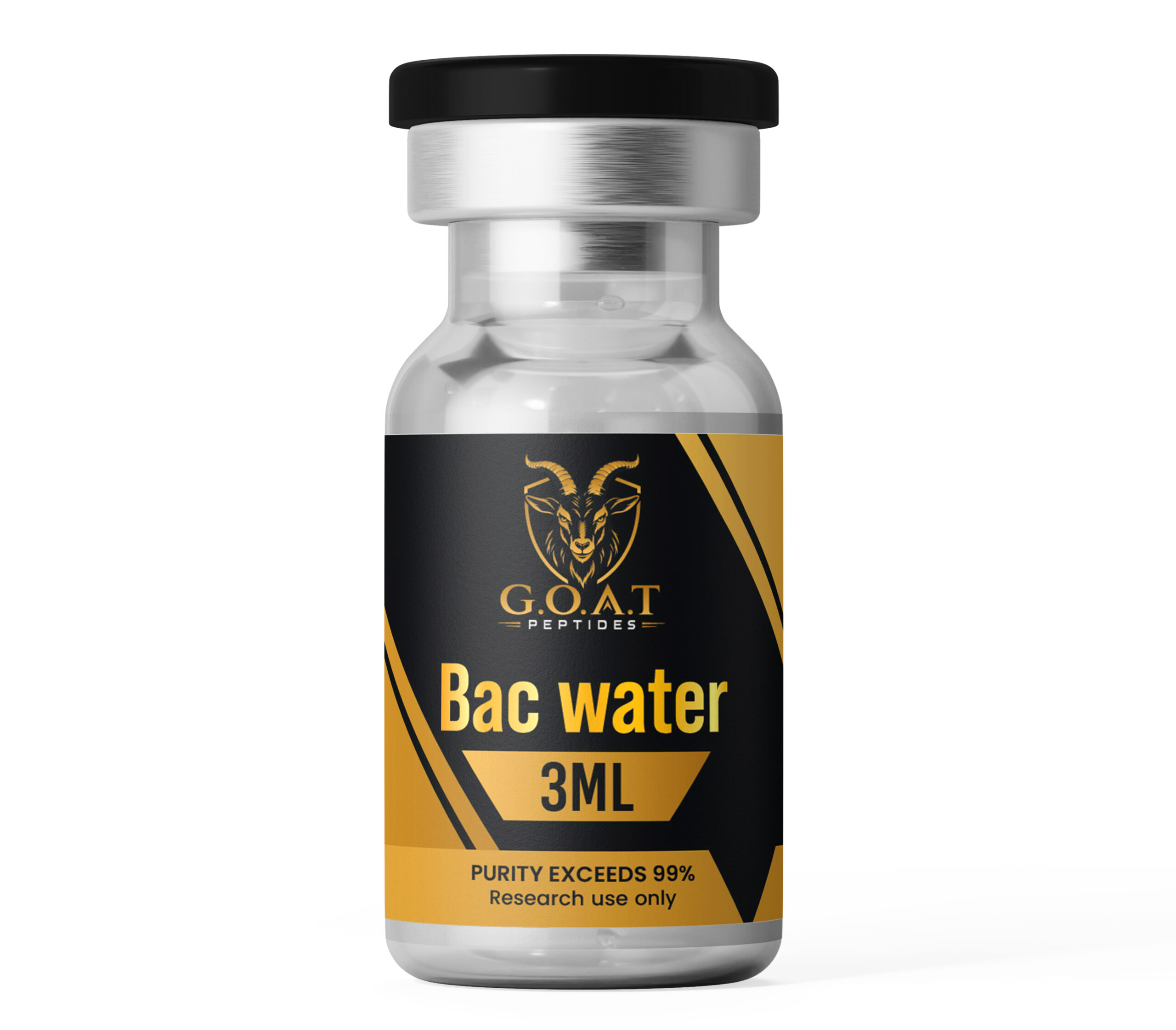
What Is Bacteriostatic Water?
Bacteriostatic water is sterile water containing 0.9% benzyl alcohol. The benzyl alcohol doesn't kill bacteria outright. It inhibits their growth, which is what "bacteriostatic" means. This allows a sealed vial to be punctured several times with a reduced risk of contamination, which is why it's the usual diluent for peptide vials drawn from over several days or weeks.
Bacteriostatic Water vs Sterile Water
| Bacteriostatic water | Sterile water | |
|---|---|---|
| Contents | Sterile water \+ 0.9% benzyl alcohol | Sterile water only |
| Multiple withdrawals | Yes, the preservative limits bacterial growth | No, intended for single use |
| Typical use after opening | Commonly discarded 28 days after first puncture | Use immediately, discard remainder |
| Best for | Peptide vials used over time | Single-use preparations, or compounds sensitive to benzyl alcohol |
Reconstituting Peptides in the Lab
Lyophilised peptides are fragile once in solution, so handling matters as much as the diluent. In general laboratory practice:
1. Let the peptide vial and diluent reach room temperature before opening. 2. Wipe both rubber stoppers with an alcohol swab. 3. Add the diluent slowly, running it down the inside wall of the vial rather than directly onto the powder. 4. Swirl gently until dissolved. Don't shake, because agitation can damage peptide structure and cause foaming. 5. Label the vial with the compound, concentration, and date, then store it refrigerated.
Not every peptide dissolves well in water. Some hydrophobic peptides need a different solvent, such as dilute acetic acid, so check the product page for compound-specific guidance before reconstituting.
What we supply: our bacteriostatic water (Bac water) is sterile water with 0.9% benzyl alcohol in a sealed multi-withdrawal vial, the diluent most of our lyophilised peptides are reconstituted with. Peptides that will not dissolve cleanly in plain water are prepared with dilute acetic acid instead.
Storage
Unopened bacteriostatic water is typically stored at room temperature, away from direct light. Reconstituted peptides should be refrigerated at 2–8°C, while unreconstituted lyophilised powder keeps best at −20°C. Orders are dispatched from the UK or USA depending on fulfilment location, and most are processed within 1–3 business days.
Research use only: Products on this page are supplied for laboratory use only. They are not medicines and are not for human or veterinary use.
This guide applies across the catalogue: the peptides in tissue repair, muscle gain and fitness and fat loss are all supplied lyophilised and reconstituted the same way.
Frequently Asked Questions
What is bacteriostatic water used for in research?
It's used to dissolve lyophilised peptides and other freeze-dried compounds. Its benzyl alcohol preservative allows a vial to be accessed multiple times with less risk of bacterial growth.
What is the difference between bacteriostatic water and sterile water?
Bacteriostatic water contains 0.9% benzyl alcohol, which inhibits bacterial growth, so it suits vials used over time. Sterile water contains no preservative and is meant for single use.
How long does bacteriostatic water last after opening?
Vials are commonly discarded 28 days after first puncture. Unopened vials should be used by the expiry date on the label.
Can bacteriostatic water dissolve every peptide?
No. Most water-soluble peptides reconstitute well in it, but some hydrophobic peptides need a different solvent, such as dilute acetic acid. Check the product page for each compound.
Should I shake a vial to dissolve a peptide?
No. Shaking can damage peptide structure and cause foaming. Add the diluent slowly down the vial wall and swirl gently until the powder dissolves.
How should bacteriostatic water be stored?
Store unopened vials at room temperature away from direct light. Once a peptide is reconstituted, keep the solution refrigerated at 2–8°C.
#