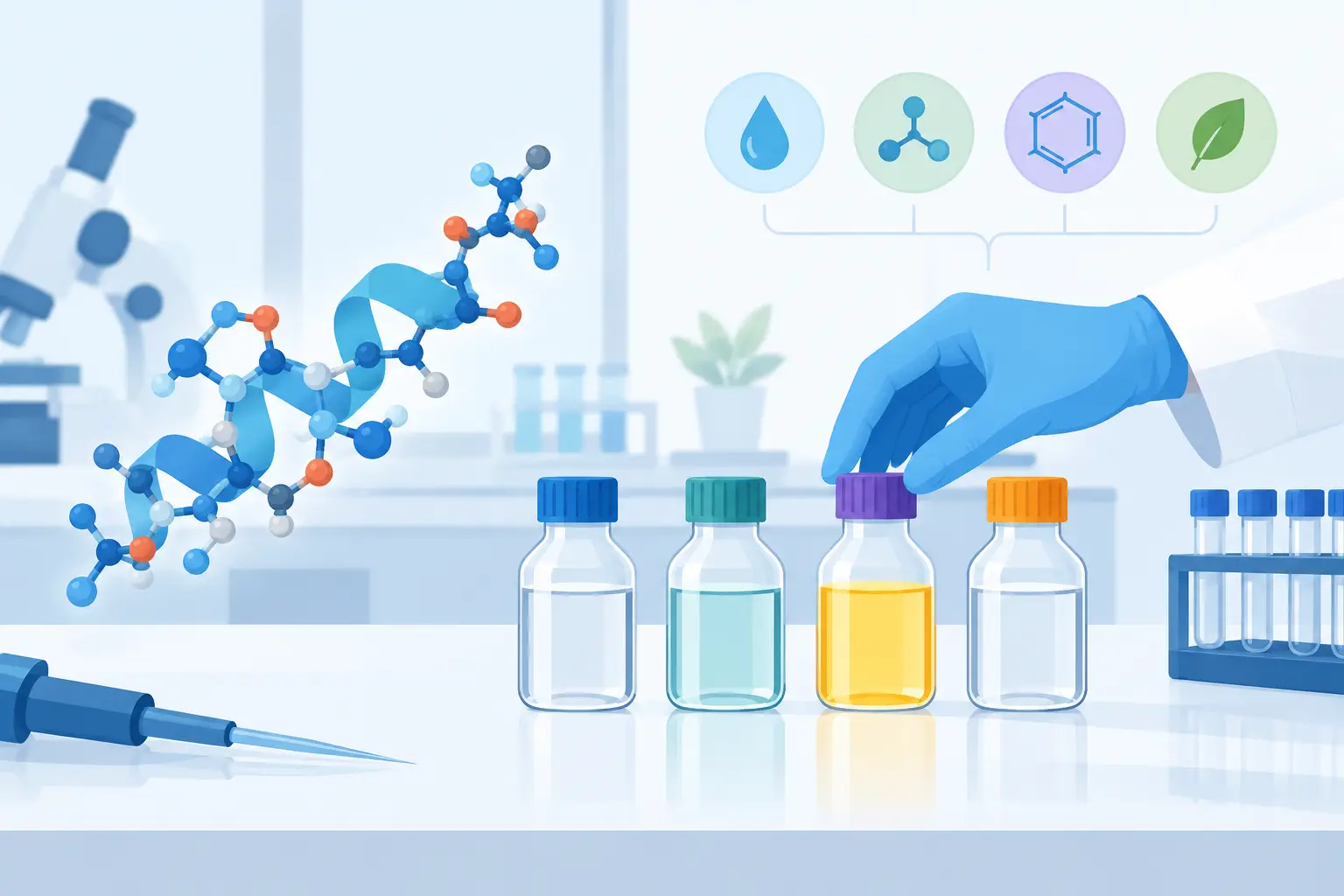
How to Select Peptide Solvents for Research
Learn how to select peptide solvents by assessing sequence, pH, concentration, compatibility and documentation for controlled laboratory work in research.

Learn how to select peptide solvents by assessing sequence, pH, concentration, compatibility and documentation for controlled laboratory work in research.
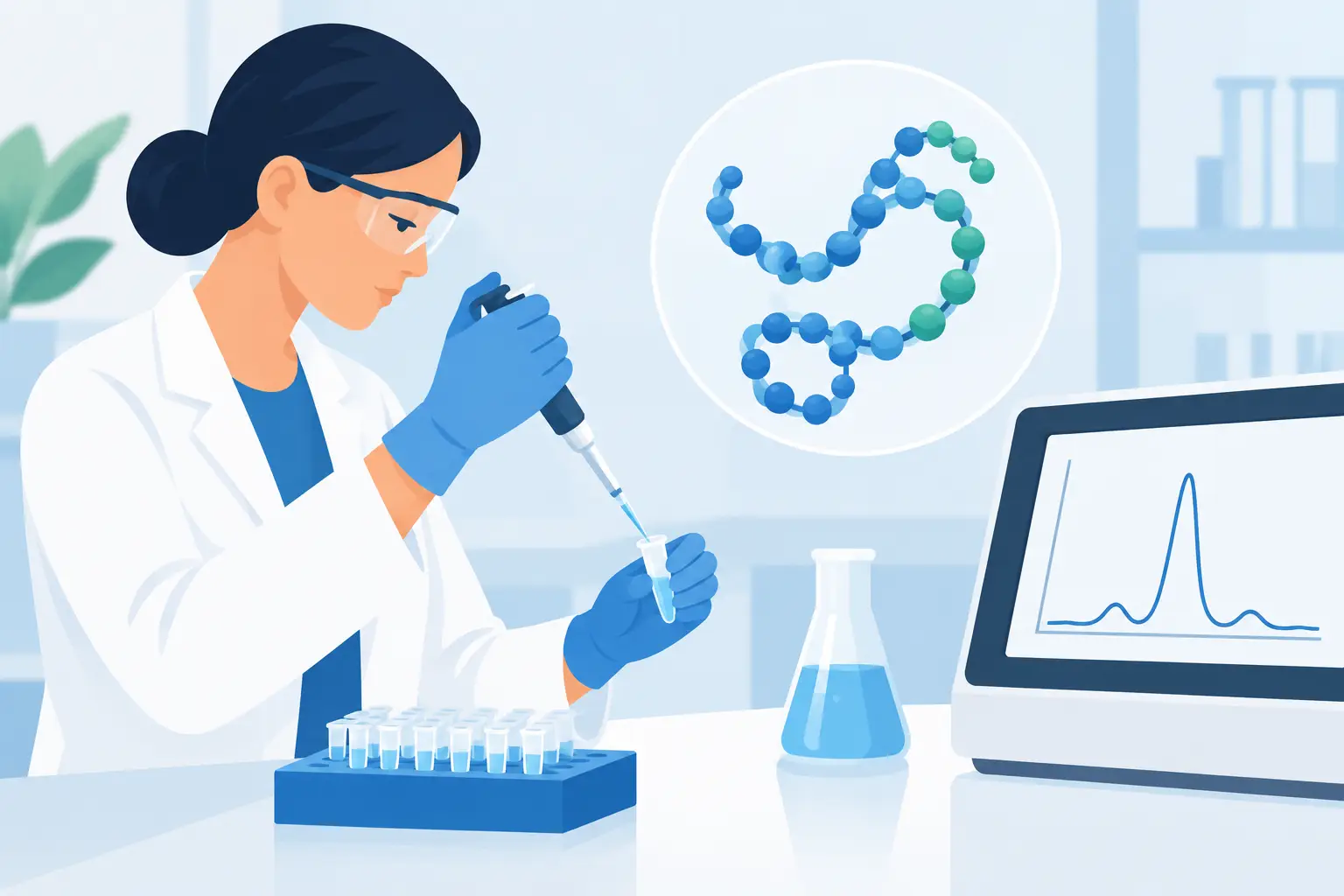
Learn how to calculate peptide concentration from vial mass, molecular weight and reconstitution volume, with checks that protect repeatable research work.

Peptide solubility assessment explains how sequence, solvent, pH and verification shape reproducible handling of lyophilised research materials precisely.
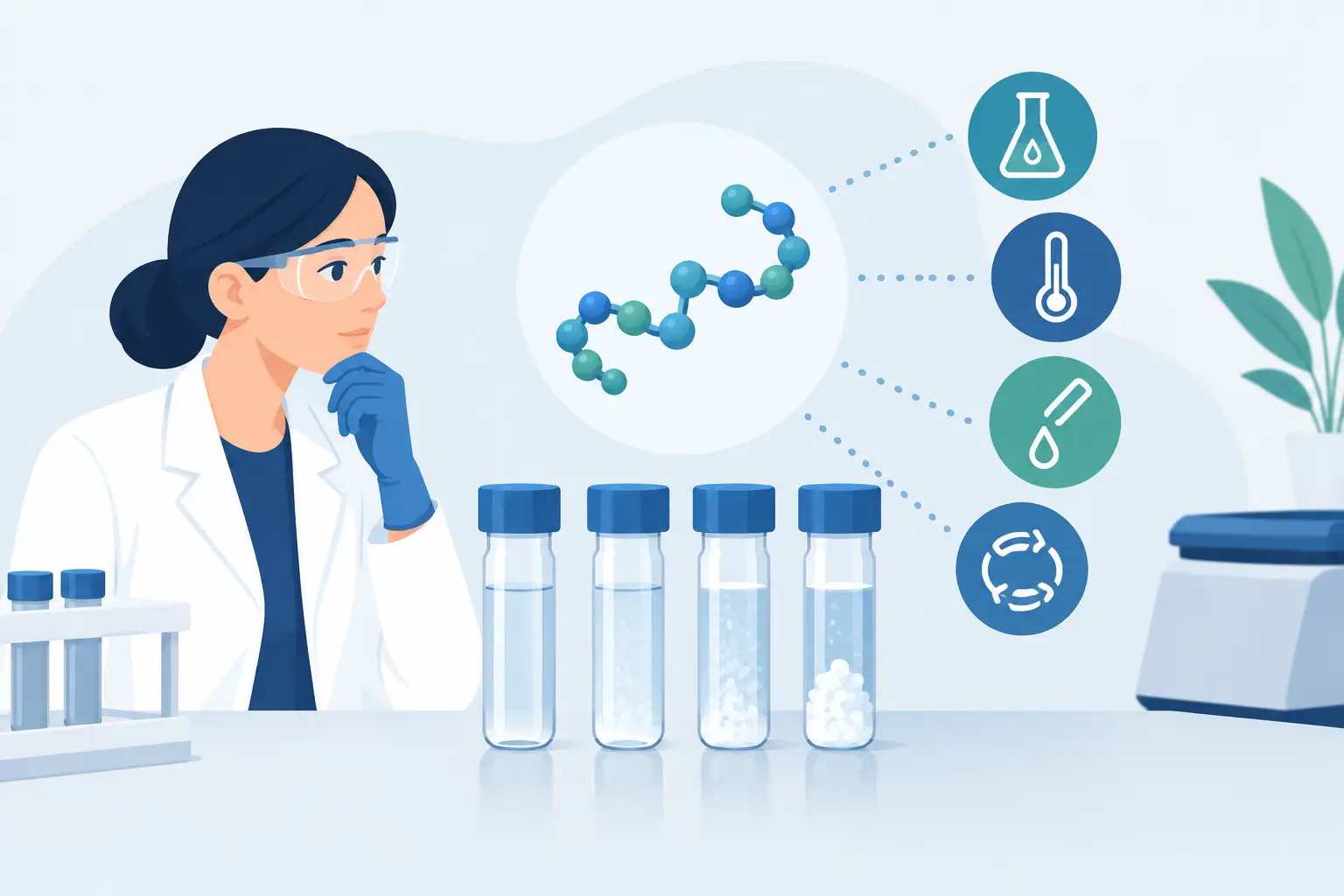
This peptide solubility troubleshooting guide helps researchers assess aggregation, select suitable solvents, retain sample integrity, and document work.
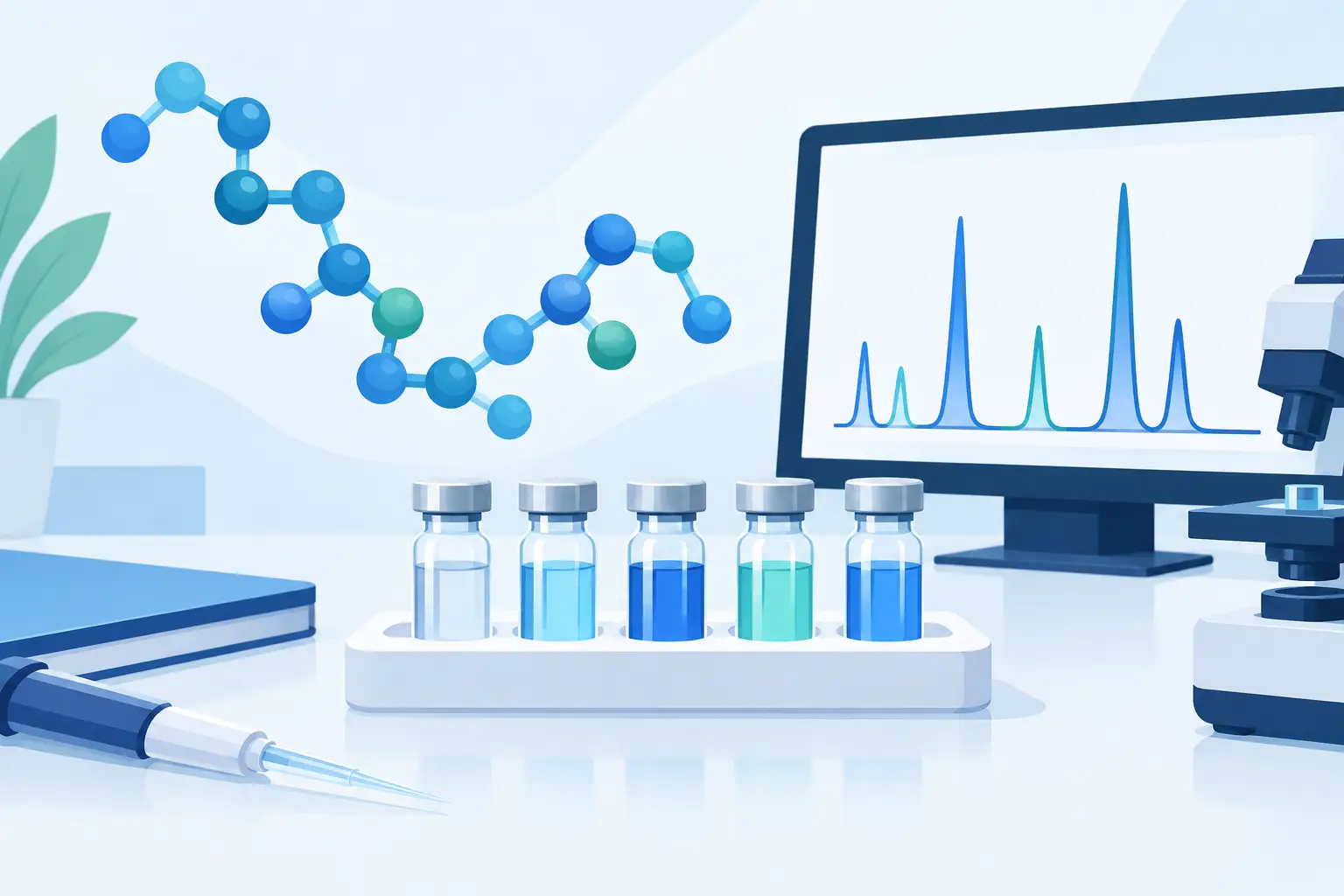
Learn how to select peptide standards using identity, purity, traceability, stability and commutability criteria for defensible laboratory research results.
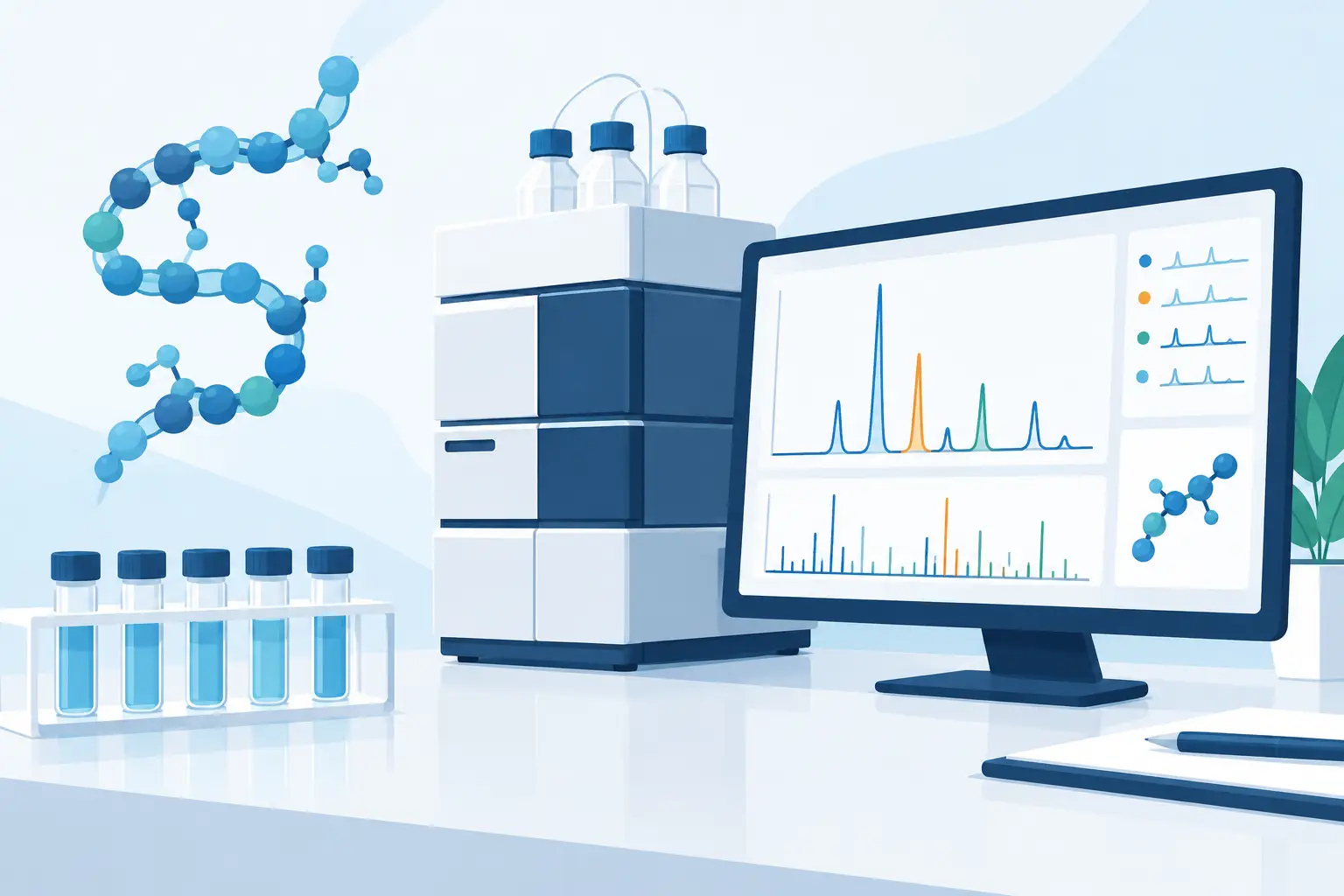
Peptide impurity profiling explains how HPLC, mass spectrometry and batch traceability establish identity, purity and confidence in research materials.
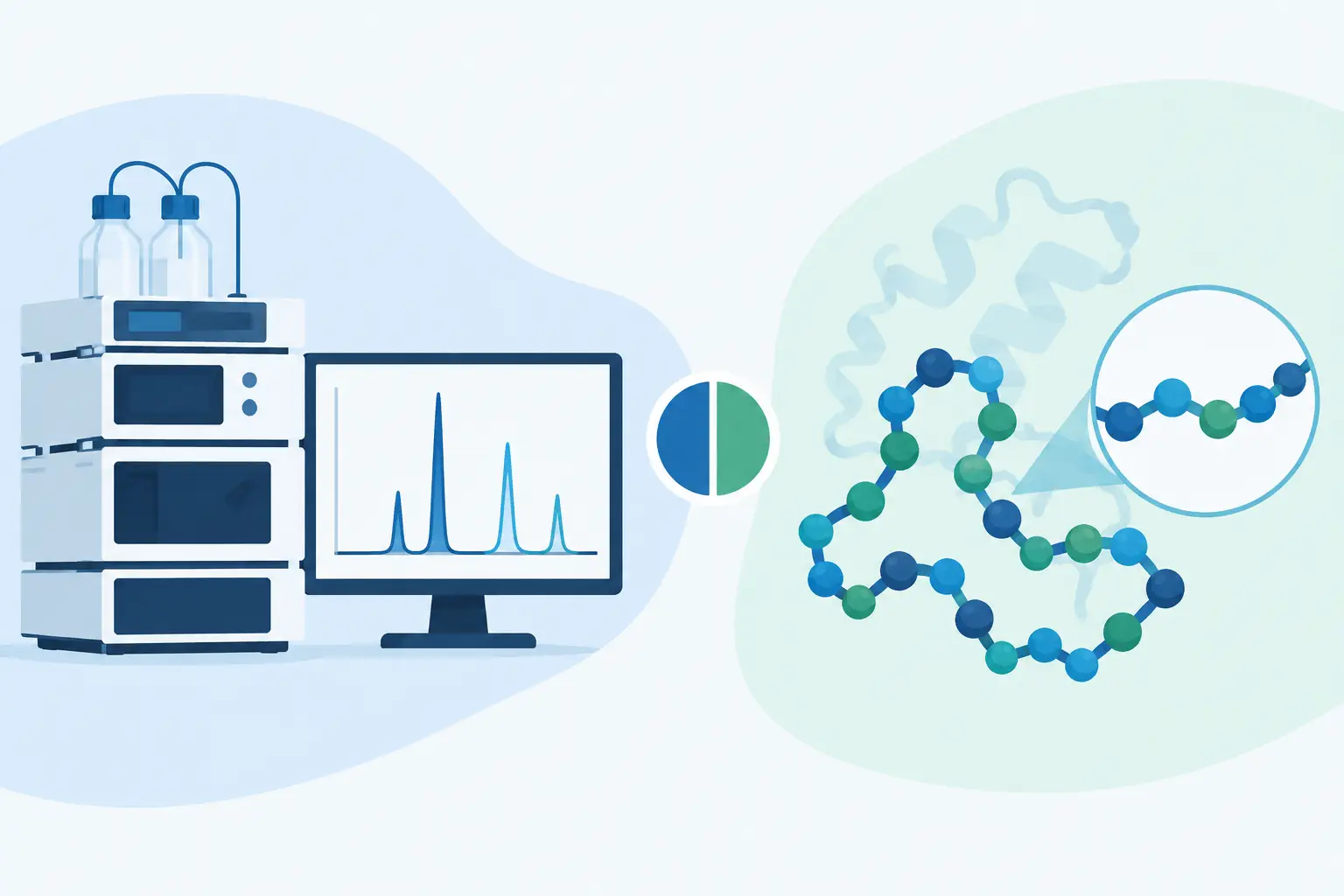
HPLC purity versus peptide content measures different things. Learn how to read a CoA, assess assay values, and make sound research purchasing decisions.

Avoid common peptide handling errors that undermine identity, stability and repeatability. Apply disciplined storage, reconstitution and records in research

Use this peptide catalogue selection guide to assess identity, purity, analytical evidence, vial format, batch traceability and cold-chain dispatch.
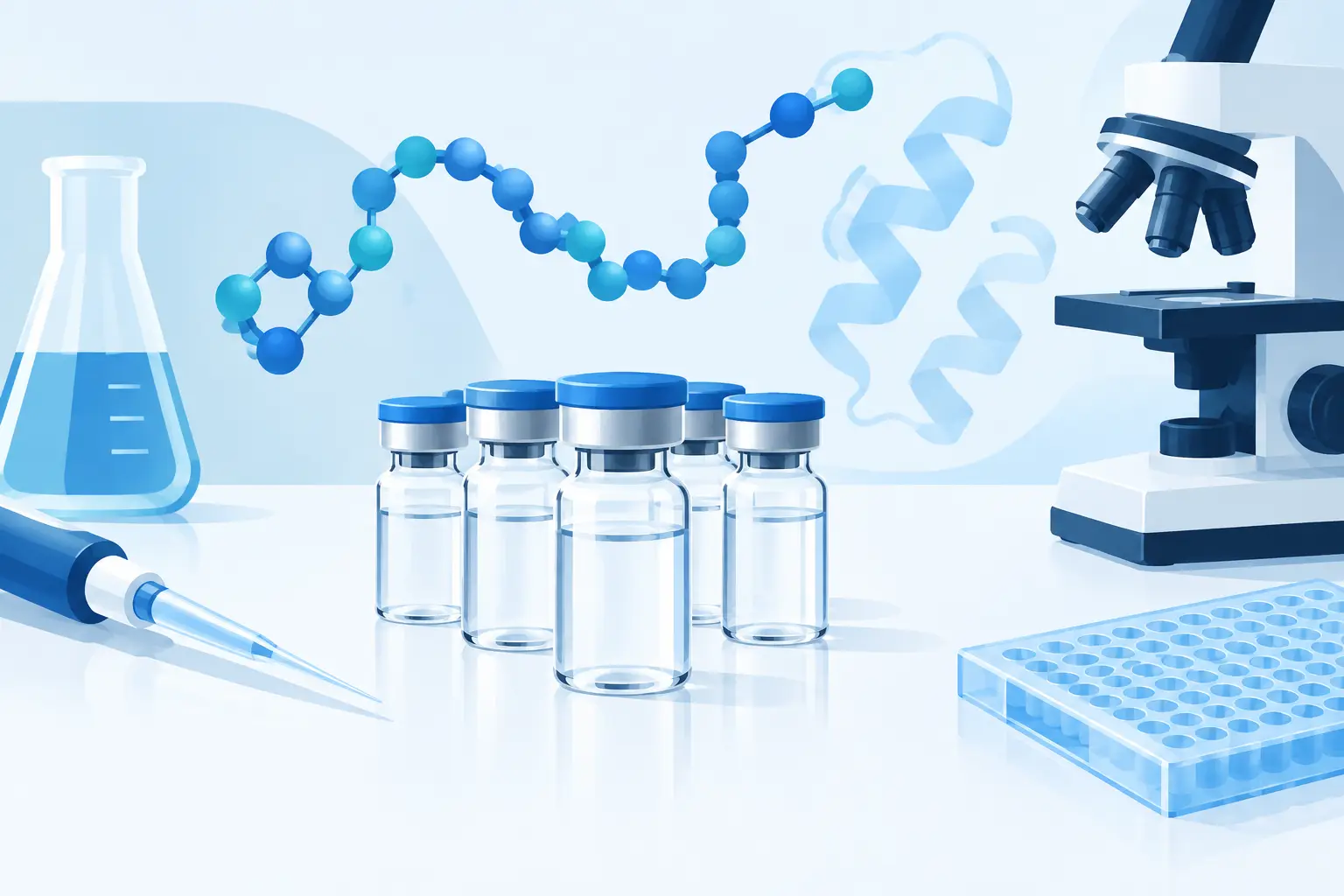
Peptide stock solutions require controlled solvent selection, concentration records and cold storage to fully protect stability, identity and traceability.